


Our Protective Order History
In one of my last blog posts, A Protective Order That Protected Nothing, I explained the sheer number of protective-order violations that occurred during our litigation.
I also explained Judge Kevin M. Miller’s refusal to deal with those violations, despite the Stipulated Protective Order that governed the case.
We Had Proof
We were not guessing. We had hard evidence.
- Seventy-four pages of confidential, private medical records were released without confidential designations. Defense counsel refused to physically remark them as confidential for more than a month. It was not until we threatened a sanctions motion that the documents were immediately and accurately marked.
- A confidential video from inside our home and business office was uploaded to a public website based in Germany.
- Confidential photos of a firearm were described in detail in a public court filing.
- My own sensitive abuse testimony, taken from a confidential deposition transcript, was summarized in public court documents (albeit incorrectly).
- Defense Counsel repeatedly quoted confidential and sensitive deposition testimony from parties and third-party witnesses in public court documents and filed confidential documents in public affidavits.
We asked the court for help. Repeatedly.
We raised these violations orally at a hearing. The judge did not address them.
We sent a follow-up letter to the court detailing the violations. He ignored that too.
Then, in his summary-judgment order, he dismissed all of it as “moot.”
When the Court Refuses to Enforce Its Own Order
It became painfully clear that when the Court repeatedly ignored these violations, Defendants and their counsel took that as a license to continue.
And they did.
The violations did not stop after the summary-judgment order. More confidential documents, and more quotes taken from confidential materials, kept appearing in public filings, including in Defendants’ Principal Brief to the Court of Appeals.
In other words, the Court’s refusal to deal with the problem did not make it go away. It made continued violations easier.
Then Came the March 6, 2026 Letter
Eight days after the Court of Appeals’ final judgment was filed, we received a 4-page letter from counsel for Defendants, Attorney Ross Tentinger.
Source: March 6, 2026 redesignation letter from counsel for Defendants; on file with Justice-Denied.org.
They were “requesting” that we re-mark most of the confidential documents we produced during the litigation as public. By my calculations, the request encompassed over 3700 pages in total.
To me, their letter did not read like a simple request. It read like a demand.
And it was breathtaking in scope.
- 75 pages of my private medical records: including records going back to my birth in the hospital and a childhood hospitalization at age 8. Not stopping there, they wanted to make my mental health records public from when I was 16 years old.
- A 6-page medical report of a private female medical exam: This was not a report from my hair dresser or my podiatrist. This was a detailed medical report from my primary care physician, with intimate physiological detail.
- 90 pages of Craig’s private medical records: including records involving multiple surgeries from the mid-1980s and follow-up nursing care.
- 14 confidential deposition transcripts: many containing detailed testimony involving abuse or medical issues.
- 28 confidential court filings: all referencing confidential documents, testimony, medical records, or home-security-system videos.
- 107 home security system videos: containing deeply sensitive discussions about childhood abuse, trauma, panic attacks, and private family conversations during one of the most stressful periods our family has ever lived through. Worse yet, the videos also showed the layout of our home and business.
- A 400+ page medical research book written by Craig: which again contained substantial medical information, records, and summaries from my doctor visits, as well as genetic data, uniquely protected under Minnesota statutory law.
- Firearm photographs and a picture of the gun permit: documenting a firearm purchased for protection because of concerns for my safety.
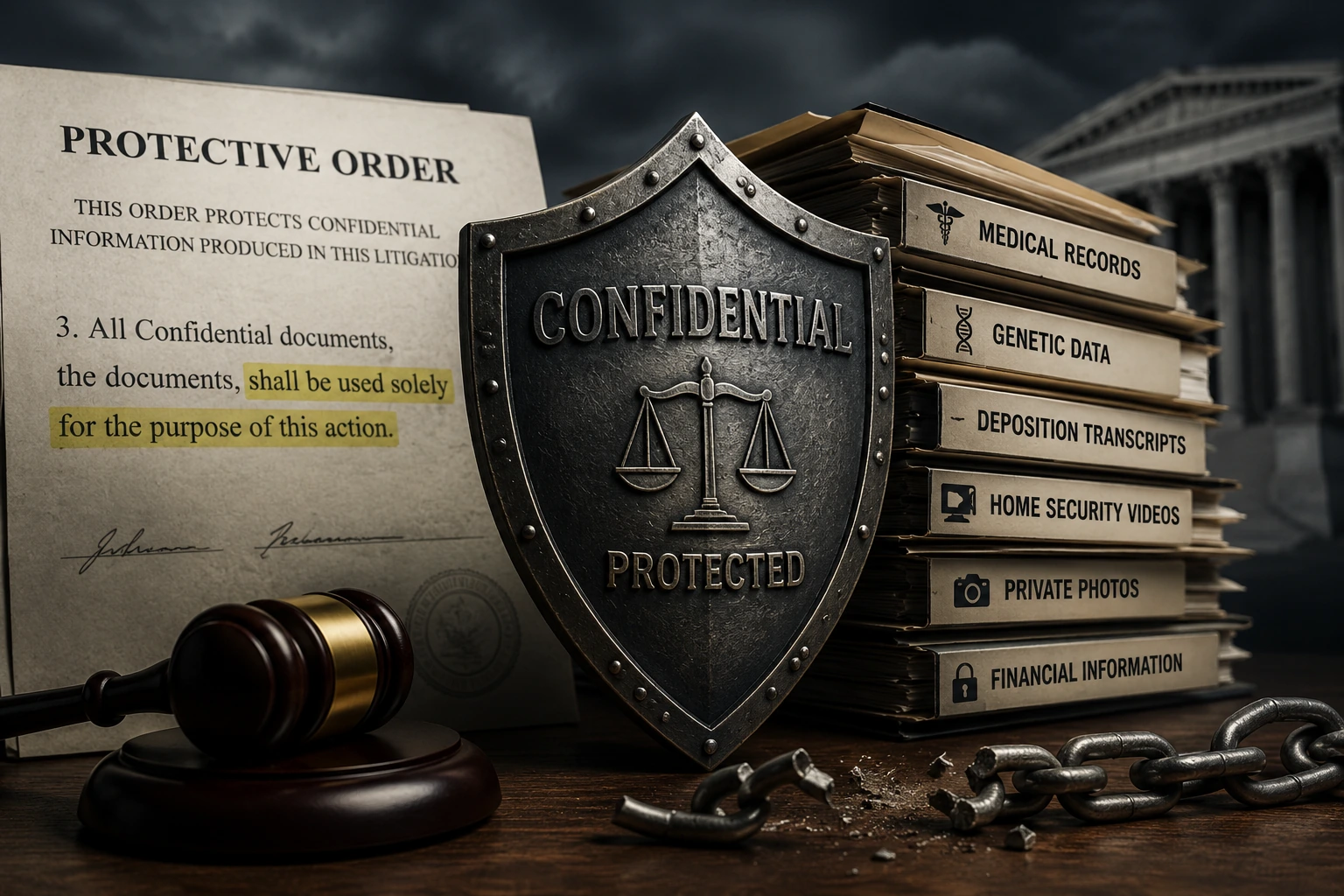
The Amended Protective Order in our case made this clear: materials produced in good faith and marked confidential “shall be used solely for the purpose of this action.”
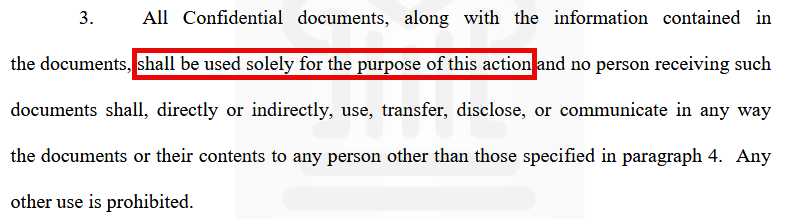
The case is over.
Any use of those materials now would obviously occur outside the litigation.
Why This Hits So Deeply
For readers who do not know my story, I am an adult survivor of childhood abuse.
I came from a physically, verbally, and emotionally abusive household. As children, we lived in constant fear of my father. I have written elsewhere on this site about the physical abuse and will not repeat those details here. Life became unbearable. I felt I had no other choice.
Later, with the help of my husband Craig, I built a new life. I was a successful businesswoman, wife, and mother.
Then it all shattered.
Craig’s estranged son, Sean C. Stevenson from Rosemount, Minnesota, after receiving approval from Craig’s sister, Lisa Stevenson-Allen, a Licensed Professional Clinical Counselor (LPCC), contacted my estranged father without my knowledge and against my wishes.
After they knew I had suffered a panic attack because of that first contact, Sean sent 25 pages of highly sensitive information to him, including:
- details of the security measures we had taken to protect me from him,
- my ongoing fear of him,
- statements that we viewed him as an abuser, and
- my business and personal email addresses.
A police officer told me that this conduct fit the definition of harassment under Minn. Stat. § 609.749, the Minnesota statute in force at the time.
We sent four cease-and-desist letters. We made it clear we would pursue litigation if they did not stop.
Source: Four cease-and-desist letters referenced above; on file with Justice-Denied.org.
Later, during discovery, we found a text Sean sent to Lisa after those contacts with my father and after four cease-and-desist letters had been sent to the group. It was chilling:
“Spoke to mom, she sees no reason to give in. I’m the same. You?”
Source: Sean-to-Lisa text message quoted above; on file with Justice-Denied.org.
They knew I was having panic attacks. They knew their conduct was causing significant emotional and psychological distress. And they chose to continue anyway.
And Sean’s contempt did not stop there. In a Google review left for an earlier attorney, he said that he had told me to “pound sand” and that I had “slithered back into whatever hole [I] crept out of.” He was later caught lying in his discovery responses and deposition about posting that review and lying about whether he deleted it after litigation began.
Bait and Switch
Defendants’ Counsel assured us during litigation that medical records were confidential – and there was no argument otherwise:
- On August 20, 2021, Attorney Tentinger confirmed in an email that all medical records would be treated as confidential under the Protective Order, stating,
“any medical records will be confidential.”
- Attorney Kirsten Hansen of Stich Angell stated in a December 21, 2021 letter that,
“We do not object to Marie’s medical records being confidential….”
- Attorney Hansen reiterated in a December 29, 2021 letter:
“We do not object to Marie’s medical records being marked Confidential (Plaintiffs 411 450, 529–530, 2809–2832, as well as those obtained by Defendants).”
Sources: Assurances quoted above, in quotation order: Ross Tentinger email dated August 20, 2021; Kirsten Hansen letters dated December 21 and December 29, 2021. Copies on file with Justice-Denied.org.
Yet now, after the conclusion of the case, they pulled a bait-and-switch. The same Bates ranges noted in Attorney Hansen’s December 29, 2021 record were now part of a demand for redesignation. Medical records produced in good faith, under the supposed protection of the protective order, were now fair game.
In total, Defendants and their counsel demanded that more than 1,350 Bates documents be redesignated from Confidential to Public, and that more than 1,900 pages of highly sensitive deposition testimony be stripped of confidentiality as well.
We objected. Strenuously.
On April 10, 2026, we sent a 17-page letter detailing why most of the documents challenged by the Defendants needed to retain their confidential designations. We pointed out that many of the records they were requesting were medical records protected under the Minnesota Health Records Act (MHRA) (Minn. Stat. Ch. 144). We pointed out that some of the records contained genetic data, and any dissemination without my “written informed consent” would be a violation of Minn. Stat. § 13.386, subd. 3(a)(4)(i).
That should have been enough to stop them.
It was not.
The May 1, 2026 Motion
On May 1, 2026, Defendants filed motion papers in Otter Tail County District Court in their attempt to strip our documents of their rightful confidentiality protections. The motion was filed more than 60 days after the final appellate judgment was handed down in the case on February 26, 2026. According to the terms of the protective order, confidential documents were supposed to be deleted or destroyed within 60 days. Sixty days from final judgment was April 27, 2026.
Instead of seeking a stay of the protective order’s destruction provision, Defendants unilaterally decided to ignore it. And they refused to delete the documents in their possession by April 27, 2026.
Defendants blatantly told the Court:
The identified court records and discovery documents identified in the accompanying affidavit do not contain trade secrets, competitively sensitive information, private personal information warranting protection, or any other content warranting protection under Minn. R. Civ. P. 26.03.
Doc. 579, at 2. (emphasis added)
Worse yet, Defendants did not merely describe the documents they were earmarking for redesignation. As if to thumb their nose at us and the Court, they filed these restricted materials – over 1700 pages – directly with the Court. They did not have my permission to retain or dissemminate any of my medical records or genetic data.
As a result, my genetic data – and medical records that should have been deleted by that time – are officially sitting on a government server somewhere without my authorization. As of this writing, Defendants have made no attempt to remove the records.
What is Perceived Disclosure?
The wording of their motion was interesting – and perhaps enlightening. Their reasoning for demanding redesignation of these documents was,
“the substantial likelihood of future disputes between these parties over the use, disclosure, or perceived disclosure of materials that plaintiffs designated confidential during this case.”
(Doc. 579, at 18.) (emphasis added)
Perceived disclosure?
If Defendants had deleted the documents by April 27, 2026, and had not violated the terms of the protective order, how could there be any future use, disclosure, or perceived disclosure?
Their memorandum continued:
“Given the sheer volume of materials designated confidential, and given plaintiffs’ demonstrated willingness to litigate aggressively throughout these proceedings, continued over designation is likely to generate additional motion practice and disputes unless the designations are addressed now.”
(Doc. 579, at 18.)
Again, if the documents were deleted on time and had not been disclosed anywhere, it was unclear to us how there could be additional motion practice. If there is no use, disclosure, or “perceived disclosure”, why the concern?
We pointed this out in our May 15, 2026 filing to the Court:
That theory is nonsensical, unless Defendants violated the Protective Order and are making the motion to “get ahead of the problem.”
If Defendants had not used, disclosed, transferred, or communicated the Confidential Documents, there would not be a “substantial likelihood of future disputes between these parties over the use, disclosure, or perceived disclosure of materials that plaintiffs designated confidential during this case.” (Defs.’ Mem., at 18.) If that were the reason, why did Defendants initiate an out of-the-blue demand to redesignate thousands of pages of Confidential Documents in their Motion, years after summary judgment was entered? … There is no need for Confidential Documents to lose their court-order protections for “future disputes” unless Defendants are attempting to legitimize prior improper use and disclosure of Confidential Documents after the fact by erasing that designation.
Doc. 613, at 11.
Our brief continued:
The lack of any articulated basis for this procedurally bizarre motion further suggests Defendants used, disclosed, transferred, or communicated the Confidential Documents.
Doc. 613, at 12.
In short, Defendants’ own words raised the very concern they claimed to be trying to avoid. If the confidential materials had been destroyed as required and had not been used or disclosed elsewhere, there should have been nothing left to fight about. Their repeated references to future “use, disclosure, or perceived disclosure” only deepened the question of what had already happened—or what they expected might happen next.
When the Excuse Changes – and Justice-Denied Takes the Fall
In their May 15, 2026 reply memorandum, Defendants seemed desperate. Seemingly aware that their “use, disclosure, and perceived disclosure” arguments appeared to be failing, they came up with a new target: Justice-Denied.org
Apparently concerned that we would somehow alter the content on this website, Defendants submitted Perma.cc links to many of the articles hosted here, creating frozen-in-time versions for the Court’s perusal. Most notably, they provided Judge Miller with permanent links to articles that were critical of his rulings – based primarily on analysis by AI.
They claimed that I had “[quoted] directly from [my] medical records” on this website. True enough. There is one quote on the entire website where my doctor stated – over 39 years ago – that I was “deathly afraid of returning home” at age 16. But to use that as a justification for making 75 pages of my private, intimate medical records public was a bit of a stretch, even for the Defendants.
They also made the claim:
Marie authored a webpage discussing her breast cancer diagnosis in which she alleges that defendants’ conduct caused a delay in her getting treatment.
Doc. 611, at 13-14
They included a link to my article on being “Bullied by the Judicial System.” Again, the assertion is true. But should I be penalized for having the audacity to tell the truth, even if it is uncomfortable for the Defendants and the Judge in this case?
Interestingly, the medical records for my breast cancer do support my assertion, and the Defendants know it, since they demanded access to those records during discovery. Perhaps that is why, out of all the medical records they attempted to redesignate as public, they decided not to go after the ones that documented my belated breast cancer diagnosis and surgery.
What They Said at the Hearing
During the May 22, 2026 hearing in front of Judge Miller, there was a lot of gorilla dust.
The problem was “the website.” This website. Justice-Denied.org.
The problem was “the tone of [this] website.”
The problem was that I was “quoting medical records.” My medical records.
The problem was that my medical records had supposedly been “amended.” Doctors do amend medical records based on later test results. Why that should be a factor in having my adversaries retain them forever and make them public is still unclear to me.
The problem was that Defendants didn’t want to destroy the records:
Defendants are just — do not want to have to destroy those records and without ever being able to potentially get ‘em again.
Doc. 617, at 29.
During the May 22nd hearing, our Counsel explained a very basic principle to Mr. Tentinger:
Plaintiffs obtained their own medical records. Plaintiffs are able to disclose them as they need to. That doesn’t provide the other party the right to disclose confidential documents that are Plaintiff’s medical records.
Doc. 617, at 31.
By the end of the hearing, the central issue seemed remarkably clear. Defendants did not want to destroy the confidential records, and they wanted to preserve the ability to use them again in the future. But that was precisely what the Protective Order was designed to prevent once the litigation ended. The fact that I had chosen to discuss portions of my own medical history publicly did not give my adversaries a corresponding right to retain, use, or disclose the confidential records they obtained through discovery.
Protective Orders Matter
This is why protective orders matter.
People disclose medical records, deposition testimony, family communications, photographs, videos, and other deeply private information during litigation because a court order tells them that the material will be protected. They do so because the judicial system requires discovery—and because they are entitled to rely on the promises contained in the orders governing that discovery.
Those protections cannot mean one thing while litigation is underway and something entirely different once the case is over.
For us, that principle was especially important. Defendants were not asking merely to preserve a handful of routine documents. They sought to strip confidentiality from thousands of pages of material, including medical records, genetic information, deposition testimony, and videos recorded inside our home and business. And they did so after previously agreeing that at least some of the most sensitive material—including my medical records—was confidential.
Their stated concern about future disputes involving the “use, disclosure, or perceived disclosure” of those materials only raised more questions. If the documents had been destroyed as required, and if they had not been improperly used or disclosed, why should there have been future disputes about them at all?
For nearly three months after the May 22 hearing, we waited for the answer.
On August 17, 2026, Judge Kevin M. Miller issued his decision.
The Court denied Defendants’ motion in its entirety.
The confidential designations remained in place.
That result matters. But it does not erase what came before it.
It does not erase the confidential material that appeared in public filings during the litigation. It does not erase the medical records that were produced without confidential markings, the deposition testimony quoted publicly, or the confidential video uploaded to a public website. It does not answer every question raised by Defendants’ unusual post-judgment effort to redesignate thousands of pages of material they had previously been required to destroy.
And it does not change the larger lesson.
A protective order is only as meaningful as the willingness of the parties to obey it—and the willingness of the Court to enforce it.
Litigants should not have to wonder whether the most private details of their lives will someday become bargaining chips, public exhibits, or material retained for some undefined future use after the litigation has ended. When a court orders that confidential information may be used solely for purposes of the litigation, those words must mean exactly that.
In this instance, the attempt to remove those protections failed.
But the fact that we had to fight, after the lawsuit was already over, to preserve confidentiality that had been promised years earlier is itself part of the story.
And it is a story worth telling.