

What My First Deposition Taught Me
Before my deposition, I had no real understanding of what actually happens in one. I imagined something far more dramatic—bright lights, and one or two police officers standing behind me, ready to arrest me if I said something “wrong.” I walked in with the kind of uncertainty that comes from not knowing the rules of a system that suddenly has power over you.
What I encountered was something very different, but no less unsettling.
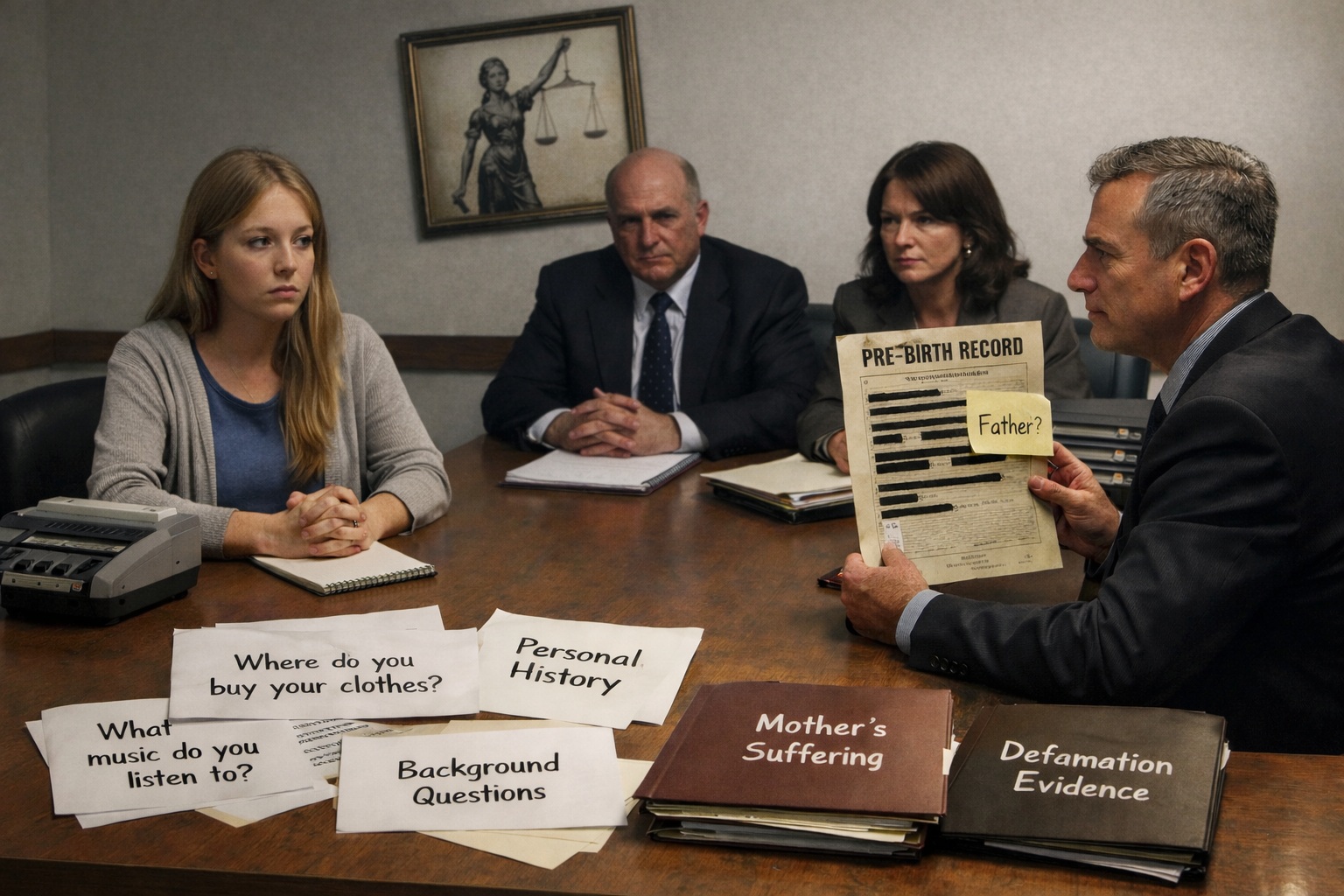
The defense attorneys asked me where I bought my clothes. They asked what music I listened to. They asked about details that had nothing to do with the harm my mother suffered or the events that brought us into that room. It seemed to me that the only times the real issues surfaced were when I brought them up myself. I kept waiting for questions that addressed the distress my mom endured—questions that acknowledged why we were there in the first place. Instead, I found myself explaining my wardrobe and music choices.
And then there was the part that left me genuinely outraged. The lawsuit involved, in part, claims of defamation—yet one of the opposing attorneys used my deposition in a way that came across as an attempt to cast my father in a negative light. Instead of focusing on the facts of the case, he brought up a document from before I was born and used it to imply my dad had done something wrong, while leaving out the facts that would have balanced the narrative or shown his innocence. As someone who had never been through a deposition before, it was hard to understand how this kind of tactic fit into any legitimate search for truth.
It felt to me like the attorneys were avoiding the very subject that mattered most—my mother’s suffering. Even now, knowing a little more about how depositions work, I still struggle to see how any of that served a real purpose in understanding what happened to her.
Later, when the people we had sued were deposed, I expected the same level of scrutiny. I assumed the process would be equally strict and equally serious. Instead, I learned that evidence had been deleted. Statements were made that weren’t true. And only when a judge finally used the word *perjury* did one of them face any consequence—and even then, it was only a sanction.
To someone like me, an ordinary person with no legal background, the contrast was stark. I walked into my deposition afraid of accidentally saying something imperfect. Others walked into theirs and apparently felt free to erase evidence or lie under oath.
I now understand that civil depositions are not criminal interrogations. There are no police officers waiting to arrest a witness for a misstatement. But understanding that doesn’t erase the emotional reality of experiencing the process firsthand.
From the outside, it looked uneven. It looked like the people who caused the harm had more room to maneuver than the people who were harmed. It looked like the truth was something we had to fight to keep on the table, while others treated it as optional.
I’m not claiming that every deposition is like this, or that every attorney behaves this way. I’m simply describing what it felt like to step into a system I didn’t understand and watch how differently it treated different people.
For those of us who come into the legal system from the outside, depositions can feel like entering a world with its own language and its own logic—one that doesn’t always line up with common sense or with the lived reality of what happened. And when you’re already dealing with the consequences of someone else’s actions, that disconnect can be hard to ignore.
My deposition ended, but the lesson stayed: when the system treats truth as optional, the people who need justice most are the ones left carrying the weight.